
The shiitake mushroom(Lentinula edodes) is one of the most widely eaten mushrooms in Asia, and is now gaining a place of choice in European health cuisine. Long used in traditional medicine, this edible mushroom is now being studied by scientists for its effects on immunity, metabolism and vitality
What are shiitake mushrooms?
The shiitake mushroom is a wood-grown Asian mushroom with a brown cap and a distinctive umami flavour. It is naturally rich in fibre, minerals, antioxidants and specific compounds such as beta-glucans, making it a real “health food”. When exposed to UV light, shiitake mushrooms can also provide vitamin D2, which is good for the immune system and bone health
Shiitake mushrooms and immunity: what studies show
The most documented benefit of shiitake mushrooms concerns the immune system. In a clinical trial involving 52 adults, daily consumption of 5 to 10 g of dried shiitake mushrooms for 4 weeks produced favourable changes in several immunity markers. The researchers observed improved activation of key defence cells (γδ-T, NK-T), an increase in salivary IgA and a reduction in CRP, a marker of inflammation
These results suggest that the shiitake mushroom could both support natural defences and contribute to a less inflammatory environment, particularly in the digestive tract. Other studies also indicate an impact on the intestinal microbiota, probably linked to its fibres and polysaccharides
Other health benefits of shiitake mushrooms
As well as boosting immunity, shiitake mushrooms have been studied for :
- Metabolic balance: some studies have shown a moderate drop in total cholesterol and an improvement in cardio-metabolic parameters after regular consumption of shiitake mushrooms
- Liver protection: preclinical data and a few human studies suggest a protective effect on the liver, as part of an overall healthy lifestyle
In integrative oncology, mycelial extracts derived from shiitake mushrooms (such as AHCC) are used as adjuvants to support immunity and tolerance to treatments, but these uses must be supervised by specialist medical teams
How should shiitake mushrooms be eaten?
To reap the benefits of shiitake mushrooms, the simplest approach is to eat them: add them 2 or 3 times a week to stir-fried vegetables, woks or soups, always cooked thoroughly. Clinical studies showing an immune effect generally use 5 to 10 g of dried shiitake mushrooms a day, over periods of several weeks
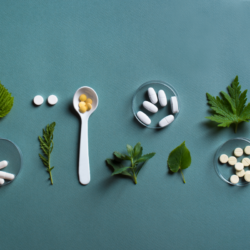
As a dietary supplement, shiitake mushrooms can be found in powder, capsule or polysaccharide-standardised extract form, often combined with other medicinal mushrooms. Dosages vary depending on the product and the objective (immune support, vitality, metabolic support), which is why it is important to seek advice from a health professional
Side effects and precautions with shiitake mushrooms
Well-cooked shiitake mushrooms are generally well tolerated by healthy adults when consumed as food. On the other hand, eating raw or undercooked shiitake mushrooms can cause a characteristic flagellate dermatitis, a highly itchy, streaky skin rash described in several clinical cases
Digestive (nausea, diarrhoea) or allergic reactions are still possible in sensitive individuals, especially with high-dose supplements. As a precaution, concentrated forms of shiitake mushrooms are not recommended without medical advice for pregnant or breast-feeding women, transplant patients, people undergoing immunosuppressive treatment or those with a history of severe reactions to mushrooms
- https://www.sciencedirect.com/science/article/pii/S3050475925004993
- https://www.sciencedirect.com/science/article/abs/pii/S0924224423000821
- https://pubmed.ncbi.nlm.nih.gov/25866155/
- https://www.mskcc.org/cancer-care/integrative-medicine/herbs/shiitake-mushroom
- https://pmc.ncbi.nlm.nih.gov/articles/PMC4112260/